Property Manager Guide to TSCM Rental Building Surveillance Detection: Tenant Privacy + Liability Protection (2026)
By Imperial Consulting Unit Inc. · Licensed PI · TSCM Certified
Property Manager Guide to TSCM Rental Building Surveillance Detection: Tenant Privacy + Liability Protection (2026)
Property managers are responsible for tenant privacy and building security. Unauthorized surveillance—by tenants, guests, or intruders—creates legal liability, insurance exposure, and trust violations. This guide helps you detect, document, and eliminate unauthorized surveillance devices in rental buildings across Ontario.
Whether you oversee a single 12-unit building in Ottawa or a 40-property portfolio spanning the GTA, your duty of care extends far beyond broken boilers and noise complaints. In 2026, miniature audio bugs, WiFi-enabled covert cameras, and rogue cellular interceptors are readily available to anyone with a grievance and an internet connection — yet the liability exposure from a single discovered device can reach six figures. A professional office TSCM sweep is the only method that generates court-admissible, insurance-grade documentation of a clean building.
Ready to assess your risk profile now? Book a confidential consultation and we will scope a sweep before you commit to anything.
Why Property Managers Need TSCM: Tenant Privacy + Liability Protection
Most property managers think of surveillance as something they deploy — parking cameras, lobby intercoms, key-fob access logs. The threat model in 2026, however, runs in both directions. Tenants, ex-partners, intruders, and disgruntled contractors all have the means and motive to install unauthorized surveillance equipment in your building's common areas — and when they do, you are the party with legal accountability.
Ontario's Residential Tenancies Act (RTA) section 14 guarantees tenants the right to quiet enjoyment of their unit. Legal commentators increasingly interpret this to include freedom from unauthorized surveillance in shared spaces. If a device is discovered in your lobby and you cannot demonstrate proactive due diligence, your exposure to privacy tort claims expands considerably. A certified Technical Surveillance Countermeasures (TSCM) sweep generates the documentation that proves you acted responsibly — before a complaint, not after.
Beyond tenants, property insurance underwriters are beginning to treat pre-loss condition verification as a claims-defence factor. A TSCM sweep report on file before a privacy-related claim strengthens your coverage position materially.
Unauthorized Surveillance Threats in Rental Buildings: Tenants, Guests, and Intruders
The threat landscape for rental buildings is more complex than most managers realize. Unlike a corporate boardroom — where the threat is typically external — rental buildings face surveillance risks from inside, outside, and in-between. Common documented scenarios include:
- Ex-partner harassment: An abusive ex-tenant plants a listening device in the lobby ceiling to track a former partner's daily movements after eviction.
- Eviction defence strategy: A tenant records hallway conversations to manufacture a harassment narrative against building management for use in Landlord and Tenant Board (LTB) proceedings.
- Theft coordination: An intruder installs a hidden camera in the package room or laundry area to schedule break-ins around tenant absence patterns.
- Contractor exposure: A maintenance worker or trades person leaves a motion-activated recorder behind — either for personal reasons or at the direction of a third party.
- Litigation preparation: A tenant documents perceived security failures in common areas to support a civil damages claim against the building owner.
- Competing interests: A rival property management company or disgruntled bidder plants a device during a contract transition to gather building intelligence.
In each scenario, your building's exposure is compounded: you are responsible for the space where the breach occurred, and you bear the duty to demonstrate you acted on any known or foreseeable risk. The warning signs that a space may be under surveillance are often subtle and require calibrated equipment to confirm.
Warning Signs and Device Types: What Property Managers Must Know
Visual and Environmental Warning Signs
Building staff should be trained to flag the following indicators during routine walkthroughs — any single item is sufficient justification to commission a professional sweep:
- Tenant complaint of "strange sounds" or "feeling watched" in hallways or laundry rooms
- Unexplained new fixtures in common areas — smoke detectors, wall clocks, decorative items — not placed by building management
- Electrical outlets or light fixtures that appear recently replaced or show signs of tampering
- New cables, conduit, or wiring not matching recent maintenance work orders
- Small holes in drywall not attributable to maintenance records
- Adhesive or tape residue on fixtures, door frames, or ceiling tiles
- Unfamiliar WiFi networks appearing on tenant devices with SSIDs like "Building Guest" or "Lobby Free" not installed by management
- Elevator malfunction reports coinciding with new fixture installations (device RF interference)
- Package room break-ins that appear oddly timed or repeated in short succession
Surveillance Device Types Targeting Rental Properties
Detection in rental buildings requires a different toolkit than residential or executive sweeps. Device categories property managers must account for include:
- Miniature audio bugs (<1 cm) concealed in hallway smoke detectors or light fixtures, transmitting continuously via GSM or WiFi to remote handlers
- WiFi-enabled USB chargers left in lobby or common-area power outlets, streaming ambient audio indefinitely
- Covert cameras disguised as air fresheners, exit signs, or sprinkler heads, installed in laundry rooms and stairwells
- Hardwired telephone taps on building alarm lines or intercom wiring inside utility closets
- IMSI catchers (rogue cellular base stations) deployed in parking garages to intercept tenant mobile calls without a network trace
- Motion-activated recorders that run only when stairwell activity is detected, defeating RF scans conducted during off-hours
- Laser-based eavesdropping capturing conversations through lobby glass from an exterior position, leaving no physical device inside the building
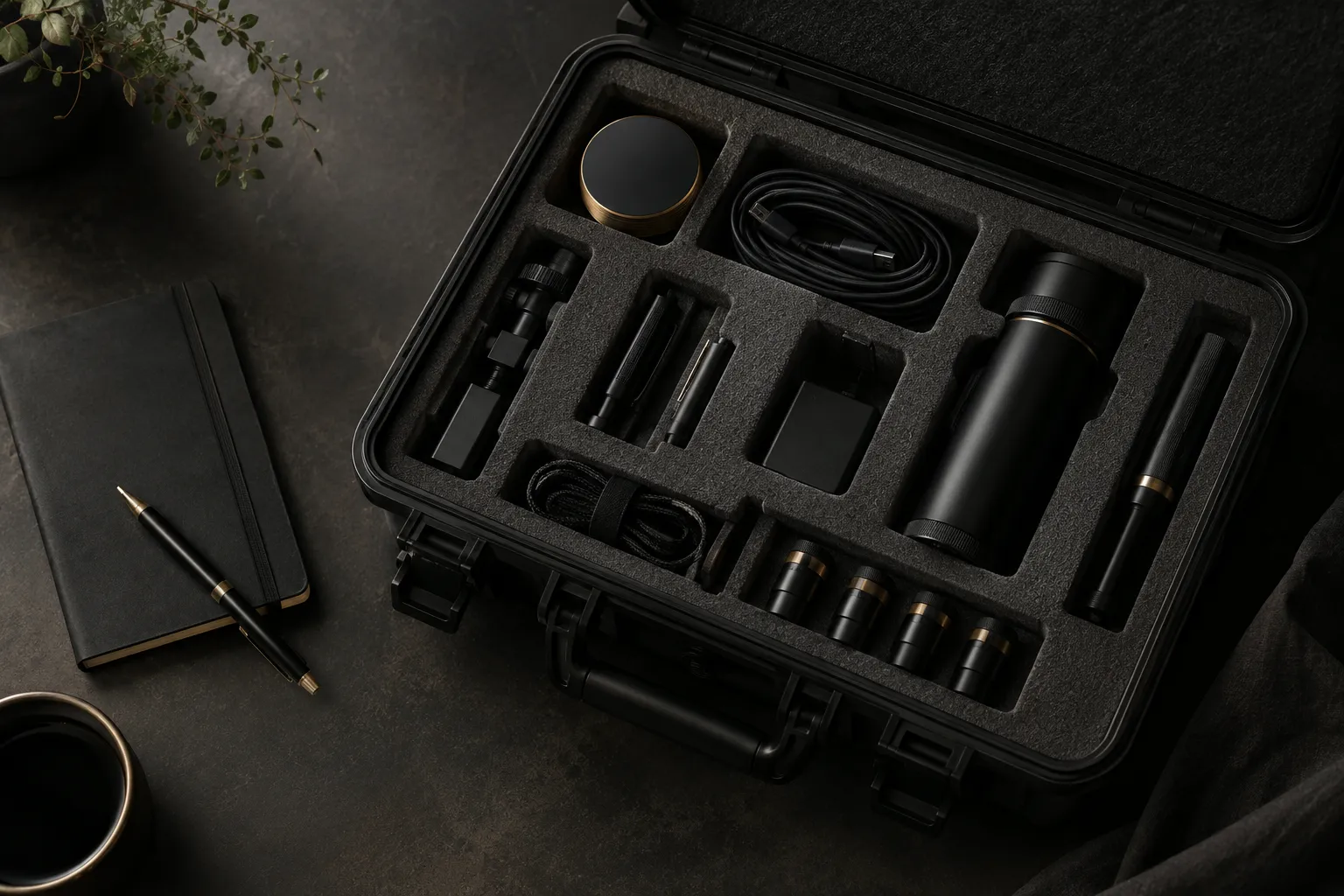
Consumer-grade RF detectors will not reliably detect passive recorders, hardwired taps, or laser interception. Professional detection requires broadband RF spectrum analysis, Non-Linear Junction Detection (NLJD), and thermal imaging — the same equipment used in our office bug sweep detection process.
TSCM for Common Areas Only: Lobbies, Elevators, Laundry Rooms, and Parking
One of the most practical points for property managers: a full TSCM sweep does not have to include tenant unit interiors. A common-area-only sweep covers the spaces entirely within your legal control — without requiring tenant notice or consent under the RTA. The standard common-area sweep protocol covers:
- Main lobby entrance and building directory area
- Elevator cars and elevator lobbies on each floor
- Shared hallways and corridor junctions
- Laundry and utility rooms
- Package and parcel room
- Fitness facility or amenity rooms (if applicable)
- Parking garage entrances, payment kiosks, and lighting columns — including common-area vehicle access lanes (see our vehicle sweep service for fleet or tenant vehicle threats)
- Rooftop access areas and mechanical rooms
- Stairwells and fire exits
- Exterior building perimeter at ground-floor entry points
If a sweep of tenant unit interiors is warranted — for example, during an active tenant dispute, a post-eviction inspection, or when a tenant alleges an ex-partner placed a device inside their unit — a separate protocol applies. Written notice, documented consent, and a clearly scoped authorization agreement are required. Our Bundle Package covers combined interior and common-area engagements with a single certified report.
When to Order a Sweep: Move-In/Move-Out Protocols + Decision Tree
The most common question from property managers is: "How do I know when to call?" Here is a practical decision framework for 2026:
- Before new tenant move-in (post-renovation): Contractors have unrestricted access during renovation. A TSCM sweep before keys are handed over confirms common areas are clear of devices left intentionally or inadvertently.
- After tenant move-out when a dispute is active or litigation is expected: Any device found post-eviction is presumptively attributable to the outgoing tenant, which strengthens your LTB position considerably.
- After a tenant complaint of unauthorized recording: Acting on the complaint with a professional sweep demonstrates due diligence under the RTA and under the Ontario tort of intrusion on seclusion.
- After a break-in or security breach: Intruders may plant monitoring devices during the same event triggering the break-in report — coordinating subsequent theft or harassment.
- Before signing or renewing a property insurance policy: Pre-loss TSCM documentation on file strengthens your coverage position if a privacy-related claim arises later in the policy year.
- During active lease violation investigations: Sweeps conducted during investigations must follow strict chain-of-custody protocols to preserve evidentiary value for LTB or court proceedings.
- Annual maintenance cadence: Spring and fall walkthrough sweeps aligned with building maintenance cycles maintain a defensible documentation record year-over-year without requiring a triggering event.
DIY Detection vs. Professional TSCM: Why Credentials Matter for Landlords
Consumer-grade RF wands and camera detectors are marketed for DIY security use. For property managers, relying on these tools creates a specific problem: they do not generate admissible evidence, and they will not satisfy your insurer, your lawyer, or the Landlord and Tenant Board.
| Factor | DIY / Consumer Tools | Professional TSCM (ICUnit) |
|---|---|---|
| Passive and hardwired device detection | ❌ Missed entirely | ✅ NLJD + thermal imaging |
| WiFi and IMSI interception detection | ❌ Not capable | ✅ Network analyzer + spectrum sweep |
| Chain-of-custody documentation | ❌ None | ✅ Photographed, labeled, bagged, certified |
| Insurance-grade certified report | ❌ Not accepted by insurers | ✅ Admissible in Ontario proceedings |
| PSISA-licensed operator (Ontario) | ❌ Not applicable | ✅ PSISA Act 2005 compliant |
| Expert witness available for LTB or court | ❌ No qualifying credential | ✅ CAF Veteran, MESA RF Certified, TSCM Certified |
For property managers who need consistent, documented protection across multiple buildings, our Recurring TSCM Membership removes the guesswork: scheduled quarterly sweeps with priority booking, rolling documentation for your insurance file, and standing availability for urgent post-incident sweeps between scheduled visits.
The Professional TSCM Sweep Process for Rental Buildings
Why Choose ICUnit for Property Management Sweeps
ICUnit is operated by a CAF Veteran, PSISA-licensed Private Investigator, MESA RF-Certified technician, and TSCM Certified specialist. This combination of credentials is specifically relevant for property managers: PSISA licensing ensures legal compliance under Ontario's Private Security and Investigative Services Act 2005; MESA RF certification means detection equipment meets professional standards recognized in court; CAF Veteran discipline means methodical, documented protocols that hold up under legal scrutiny.
The standard rental-building sweep follows eight steps:
- Confidential pre-call threat assessment with the property manager and building security contact — scope, prior incidents, tenant disputes, and access restrictions reviewed
- On-site protocol briefing: common areas in scope confirmed, access restricted during sweep, secure evidence staging area designated
- RF spectrum scan of all designated common areas — lobby, elevators, hallways, laundry, parking — covering consumer and professional transmission frequencies
- Non-Linear Junction Detection (NLJD) of walls, fixtures, electrical boxes, and ceiling cavities for passive and powered devices not transmitting during the scan window
- Thermal imaging for heat-emitting transmitters concealed behind walls, inside fixtures, or within utility conduit
- WiFi network analysis and rogue base station detection using a portable network analyzer — identifies unauthorized access points and IMSI catchers
- Physical inspection of high-probability concealment points: lobby console tables, plant pots, picture frames; elevator ceiling panels, floor fixtures, camera domes; hallway fire alarm boxes, outlet plates, sprinkler heads; laundry room appliance tops and utility conduit runs
- Device documentation and certified report generation: any device found is photographed in situ with metadata timestamps, labeled, bagged, and sealed with tamper-evident serial numbers; a certified report is delivered within 24–48 hours, formatted for your insurance file, LTB proceedings, or police referral under Criminal Code section 184
Total on-site time is typically five to six hours for a single building with standard common areas. Multi-building engagements use coordinated team deployment with a unified documentation package. Pricing is custom — quoted privately after a confidential consultation.
Retainer Models for Property Portfolios
For managers overseeing five or more buildings, a quarterly retainer provides structured protection across your portfolio: four scheduled sweeps per year per building; priority booking for urgent post-incident sweeps; documentation file maintenance for each property usable during insurance renewals and property sales; post-resolution re-sweeps confirming a building is clean before new tenancy; and annual threat assessment and hardening recommendations per building. ICUnit serves property managers across Toronto and the full GTA, Ottawa, Hamilton, Barrie, Kingston, London, Kitchener-Waterloo, Niagara, and Aurora — mobile deployment is standard.
"We manage a 12-unit building in Ottawa's Centretown neighbourhood. After a post-eviction tenant complaint in early 2026, ICUnit found a GSM audio transmitter inside a lobby ceiling fixture — placed the week before the tenant vacated. The certified report was accepted by our insurer and supported our LTB application. Quarterly sweeps are now standard across all our properties."
Ontario Legal Framework: RTA, Privacy Act, Criminal Code + Insurance Liability
Property managers in Ontario face a layered legal environment that makes documented TSCM sweeps a risk-management necessity, not a discretionary spend.
(a) Residential Tenancies Act, section 14 — Right to Quiet Enjoyment: Tenants have the right to peaceful use of their unit and shared building spaces. Unauthorized surveillance in common areas — regardless of who planted the device — can be argued as a breach of this right. A landlord who failed to act on a known or foreseeable risk is exposed. TSCM documentation demonstrates the landlord met their duty of care.
(b) Ontario Privacy Act + Tort of Intrusion on Seclusion: The Ontario Court of Appeal's recognition of intrusion on seclusion as an actionable tort means a tenant who discovers unauthorized surveillance in a common area may pursue a civil damages claim against the building owner. TSCM sweep records showing prior due diligence materially strengthen a landlord's defence. Review the Ontario Privacy Act with your legal counsel for current exposure thresholds.
(c) Criminal Code of Canada, section 184 — Unauthorized Interception: Unauthorized interception of private communications is an indictable offence. When a certified TSCM sweep discovers a device, the chain-of-custody report is the foundation of any police referral or Crown prosecution. Without it, the device may be challenged as improperly handled evidence.
(d) RTA sections 58–61 — Eviction Context: If a tenant disputes an eviction and alleges landlord harassment, TSCM evidence showing the tenant planted a surveillance device supports the landlord's counter-position at the LTB. Conversely, if the landlord is accused of unauthorized surveillance, a sweep report documenting no such devices were present is exculpatory.
(e) Property Insurance and Pre-Loss Documentation: Most commercial property policies include a duty to mitigate foreseeable risks. Privacy-related liability is increasingly recognized as a foreseeable risk for Ontario landlords. A TSCM sweep report filed before a claim arises strengthens both your coverage position and your breach-defence posture. Review your policy language with your broker and confirm whether a TSCM sweep should be added to your pre-loss documentation file.
FAQ: Property Management TSCM, Tenant Liability, and Legal Compliance
What is the difference between tenant privacy and landlord security rights in Ontario?
Tenants hold a legal right to quiet enjoyment under RTA section 14, which courts have extended to shared building spaces. Landlords may operate visible, disclosed security cameras in common areas for safety — provided tenants receive notice. The key distinction is disclosure: authorized landlord security is conspicuous and documented; covert unauthorized surveillance is a tort and may be a criminal offence regardless of who installed the device. A certified TSCM sweep documents the landlord's proactive compliance with both frameworks.
When should property managers conduct TSCM sweeps in rental buildings?
Standard trigger events: after a tenant complaint of unauthorized recording; before new tenant move-in post-renovation; after tenant move-out when a dispute is expected; after a break-in or security breach; before signing or renewing a property insurance policy; during active lease violation investigations; and on an annual spring or fall maintenance schedule. High-risk properties — prior incidents, active disputes, recent break-ins — should operate on quarterly sweeps in 2026.
Can TSCM sweep evidence be used in Ontario tenant dispute proceedings?
Yes — provided the sweep is conducted by a PSISA-licensed operator with proper chain-of-custody documentation. Certified TSCM evidence (photographed in situ, labeled, bagged, sealed, and documented) is admissible in Ontario civil proceedings and supports police referrals under the Criminal Code. Uncertified DIY evidence typically lacks the documentation required for admissibility. ICUnit's operator is qualified as an expert witness in Ontario proceedings.
Can property managers sweep tenant units, or only common areas?
Common areas are entirely within the landlord's legal authority and require no tenant consent. Tenant unit interiors require written notice and documented consent per the RTA before entry for a sweep. Emergency exceptions may apply but should be confirmed with legal counsel. ICUnit advises on the appropriate RTA-compliant consent process before any interior sweep, ensuring the engagement and resulting evidence are legally defensible.
How long does it take to receive a certified TSCM report after a sweep?
Certified reports are typically delivered within 24 to 48 hours of the on-site engagement. Reports include: all areas inspected with reference to floor plan; detection equipment used with calibration records; RF spectrum and NLJD scan results; thermal imaging findings; photographic documentation with metadata timestamps; chain-of-custody device handling record; and a signed expert determination by the PSISA-licensed operator. Formatted for both insurer submission and Ontario court proceedings.
What does "chain of custody" mean for TSCM evidence in property management?
Chain of custody is the documented record of how a discovered device was handled from discovery through storage. In practice: device is photographed in place before touching; placed in a tamper-evident evidence bag with a unique serial number; handling technician signs a custody log at each transfer; the report documents every person who accessed the device and when. Without this documentation, a device found during a DIY sweep may be inadmissible at the LTB or in criminal proceedings.
How often should multi-unit buildings conduct TSCM sweeps?
Buildings with no prior incident history: annual sweeps aligned with maintenance schedules. Buildings with prior incidents, active disputes, recent break-ins, or high-turnover tenant populations: quarterly sweeps. ICUnit's recurring membership is structured specifically for multi-property portfolios — scheduled quarterly sweeps, priority access, rolling documentation, and post-incident re-sweep capability. A consistent sweep record across your portfolio is your strongest risk-management and insurance documentation posture.
What does a property management TSCM sweep cost in Ontario?
Pricing is custom — quoted privately after a confidential consultation. Costs vary based on building size, number of common areas, sweep scope, urgency, and multi-property volume. Portfolio managers engaging for five or more properties typically see per-property efficiencies compared to one-off engagements. Call 905-955-7689 or submit a confidential intake request for a no-obligation assessment.
Stay Connected
Follow the ICUnit field log on LinkedIn for new Ontario threat intel, and read our Google reviews from past sweep clients.
Get Your Free Quote Today
Unauthorized surveillance in your rental building is a liability you can document, defend against, and eliminate — with the right certified partner. Whether you manage a single building or a 40-property portfolio, ICUnit provides TSCM sweeps that hold up in court, satisfy insurance underwriters, and give your tenants the documented protection the RTA demands.
Call: 905-955-7689
Book a confidential sweep consultation — we assess your building's risk profile before proposing any engagement. Serving property managers across Ontario: Toronto, Ottawa, Hamilton, Barrie, Kingston, London, Kitchener-Waterloo, Niagara, Aurora, and the full GTA.