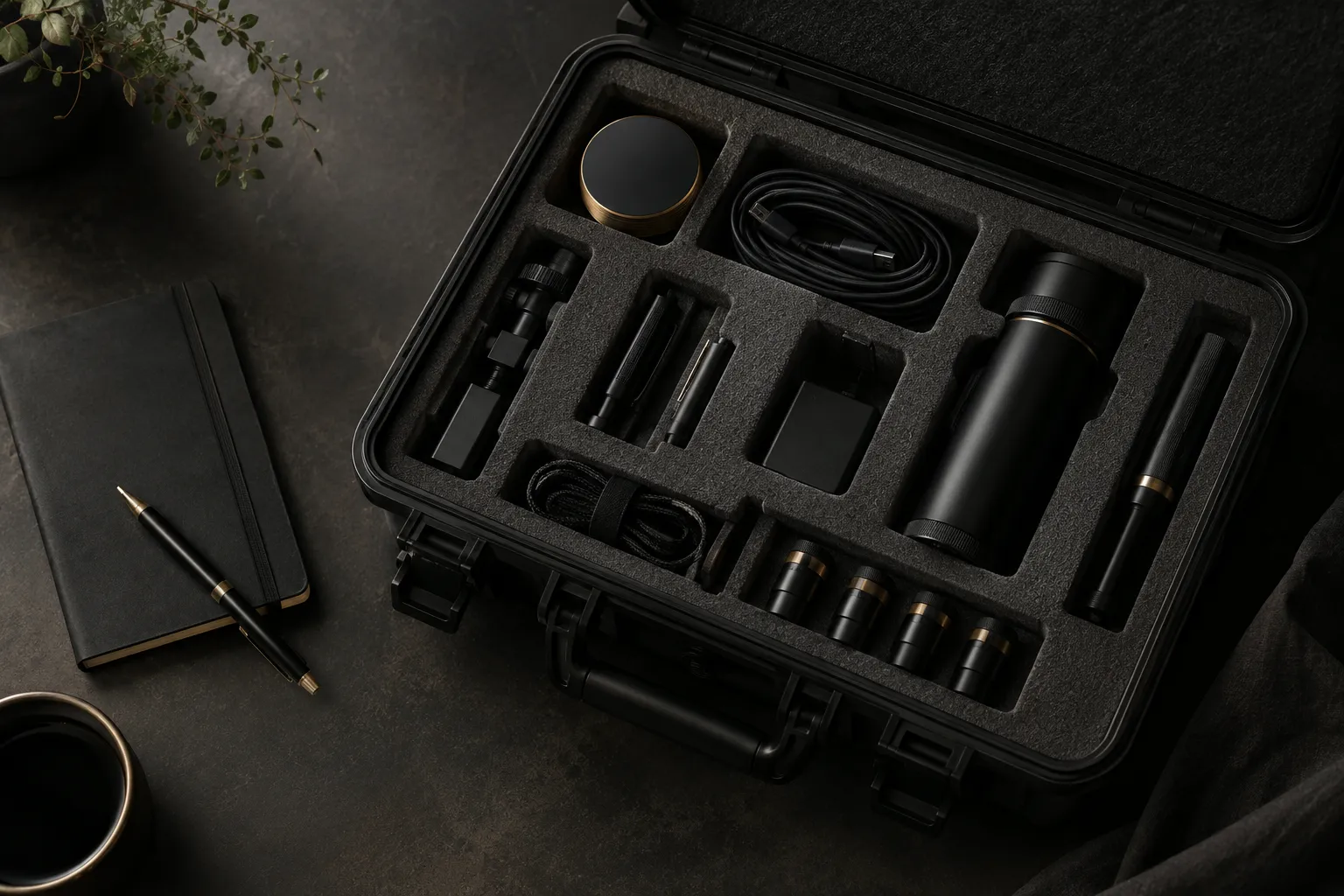
Investment Firm Counter-Surveillance: TSCM Competitive Intelligence Detection for PE & VC Ontario (2026)
By Imperial Consulting Unit Inc. · Licensed PI · TSCM Certified
Investment Firm Counter-Surveillance: TSCM Competitive Intelligence Detection for PE & VC Ontario (2026)
Private equity and venture capital transactions run on information asymmetry. When one party gains unauthorized advance intelligence — deal valuations, acquisition targets, LP terms, negotiation positions — the financial consequences can be severe and the legal exposure significant. In 2026, competitive intelligence espionage targeting Ontario investment firms has become a structured threat, not an outlier risk. Rival bidders, retained sellers protecting earn-outs, divested-fund employees, and external actors are deploying physical surveillance devices, rogue network access points, and telephone line intercepts against deal teams, target company boardrooms, and portfolio company facilities.
Unlike the generic corporate TSCM sweeps offered by most Ontario providers, investment firm counter-surveillance requires a specialized protocol aligned with deal-stage timelines, LP due-diligence documentation standards, and the evidentiary requirements of the Ontario Evidence Act RSO 1990. This guide outlines exactly what PE managing partners, VC investment directors, due-diligence managers, portfolio CISOs, deal counsel, and insurance risk officers need to know about technical surveillance countermeasures (TSCM) before, during, and after a transaction. Our CAF Veteran, PSISA-licensed, MESA RF Certified TSCM specialists are the only Ontario provider with a purpose-built investment-firm detection framework.
Why PE/VC Investment Firms Are High-Value Surveillance Targets in 2026
The 2026 Ontario deal environment is characterized by compressed timelines, elevated acquisition multiples, and aggressive competitive bidding — particularly in the technology and life sciences sectors where M&A volume is at its highest. This intensity creates powerful incentives for rival bidders to obtain advance intelligence on deal terms, valuation models, and LP commitments through illegitimate means.
Ontario hosts over 250 active PE, VC, and angel investment funds managing substantial assets under management across the Toronto financial district, the Kitchener-Waterloo technology corridor, and the broader GTA. Each fund conducts multiple active due-diligence processes simultaneously — every one of which represents a high-value intelligence target. A competitor who knows your acquisition target before you submit a letter of intent can move first. A retained seller who monitors your deal team's internal communications can structure earn-out terms to their advantage. An integrated portfolio company with a disgruntled former employee can bleed IP and financial data for months before detection.
The RCMP's economic security branch has consistently documented the rising threat of economic espionage targeting Canadian financial institutions — yet TSCM protocols specifically calibrated for investment firms remain nearly absent in the Ontario market. This gap represents significant unmanaged risk for PE/VC operators, their portfolio companies, and their LPs.
The Investment Threat Model: Who Plants Devices Against Deal Teams and Why
Understanding who benefits from surveillance — and when — is the first step in structuring an effective counter-surveillance program. The Ontario PE/VC threat model includes seven distinct actor categories, each with different motivations and preferred device types.
Competitive Intelligence Threats During Active Negotiations
Rival bidders may deploy RF transmitting microphones in target company boardrooms used for management presentations, planting devices that stream financial data and deal terms in real time. Retained sellers protecting earn-out provisions may monitor the acquisition team's internal review meetings to learn which metrics are being scrutinized and adjust disclosures accordingly. Strategic partners — advisors, co-investors, or bankers participating in limited information sharing — may plant devices in deal rooms to assess the competing bidder's valuation approach.
Post-Transaction and Integration Threats
Divested-fund employees who held access during transition periods represent the highest post-acquisition insider threat. Finance and IT staff with physical access to newly integrated facilities can plant audio transmitters, data exfiltration devices, or persistent network implants before departure. Customer and supplier representatives with routine access to portfolio company facilities may conduct surveillance on behalf of competing interests. Disgruntled shareholders in distressed acquisitions have been documented introducing listening devices in R&D areas and financial suites to monitor integration decisions that affect their residual claims.
Each of these actors uses devices ranging from commercially available RF audio transmitters to professionally manufactured VOIP-intercepting network implants. A consumer-grade RF detector cannot identify the majority of these threats. Certified TSCM methodology — RF spectrum analysis, NLJD semiconductor detection, thermal imaging, and network forensics — is required. For background on why professional-grade detection differs fundamentally from DIY approaches, see our guide to what TSCM technical surveillance countermeasures actually involve.
Deal-Stage TSCM: Three Protocols for Pre-LOI Through Post-Acquisition
Investment firm TSCM is not a single-event service — it maps directly onto deal stages, each with distinct threat profiles and detection objectives. An effective program deploys three sequential protocols.
Protocol 1: Pre-LOI Threat Assessment
Before submitting a letter of intent, a desktop competitive landscape analysis identifies the surveillance threat level associated with the target company, its industry sector, and known competitor activity. This assessment reviews public reporting on industrial espionage in the target's sector, maps likely threat actors based on the competitive landscape, and establishes the baseline TSCM scope for the pre-close sweep. This phase informs how aggressively the full forensic sweep must be resourced. Our office TSCM sweep service can be initiated on short notice for time-sensitive deal timelines.
Protocol 2: Pre-Close Comprehensive Forensic Sweep
This is the core investment-grade TSCM engagement, conducted in the window between executed LOI and deal closing. The sweep covers target company boardrooms, executive suites, finance and accounting areas, legal review rooms, and any conference facilities used for deal-team meetings. Detection methodology includes: full RF spectrum analysis across GSM, Wi-Fi, and proprietary transmission bands; non-linear junction detection (NLJD) for semiconductor devices regardless of power state; thermal imaging for active powered devices behind walls and ceilings; rogue wireless access point enumeration; telephone line and VOIP infrastructure analysis; and smart device inventory audit. All findings are documented with forensic photographs, RF spectrum charts, and a chain-of-custody report compliant with the PSISA Act 2005 licensing framework. Pricing is custom — quoted privately after a confidential consultation.
Protocol 3: Post-Acquisition Integration Detection
The thirty to ninety days following transaction close represent a high-risk window for device discovery from the seller side. Newly integrated employees with historic access to the acquired facility may have planted persistent devices before close. This protocol sweeps newly consolidated office space, evaluates the network perimeter for unauthorized access points introduced during transition, and establishes a documented clean-baseline for ongoing portfolio governance. Post-acquisition sweeps are typically followed by enrollment in a recurring TSCM membership that maintains quarterly surveillance detection across the portfolio company throughout its hold period.
Detecting Surveillance Devices in Target Company Facilities: 12-Point Assessment
The competitive intelligence espionage detection assessment used by our field team covers twelve distinct threat vectors across four categories. Understanding this framework helps PE deal counsel and portfolio CISOs structure the scope of engagement correctly.
| Category | Detection Method | Threat Addressed |
|---|---|---|
| RF Audio Threats | Full-band RF spectrum analysis | Audio transmitters, GSM bugs, hybrid devices |
| RF Audio Threats | Near-field carrier-current detection | Devices transmitting on building power lines |
| Physical Semiconductor | NLJD sweep — walls, furniture, fixtures | Powered-off or shielded devices with semiconductor junctions |
| Physical Semiconductor | Thermal imaging inspection | Powered devices concealed behind surfaces |
| Network Compromise | Rogue access point enumeration | Unauthorized Wi-Fi interceptors, evil-twin APs |
| Network Compromise | Network topology forensic audit | Undocumented network taps, exfiltration appliances |
| Network Compromise | IMSI catcher / cell intercept detection | Mobile device interception targeting deal-team phones |
| Network Compromise | VOIP infrastructure analysis | Call recording appliances on business phone systems |
| Telephony & Physical | Telephone line analysis and TDR | Hardwired line taps, parallel phone intercepts |
| Telephony & Physical | Smart device inventory and audit | Compromised smart speakers, TVs, building IoT |
| Physical Vulnerability | Physical access point assessment | Unsecured service access exploited for planting |
| Physical Vulnerability | Furniture and fixture disassembly sweep | Devices concealed in chairs, tables, power strips |
This 12-point framework is specifically calibrated for the deal-room environment where a single undetected audio transmitter can stream weeks of confidential management presentations to a competing bidder. For context on how surveillance devices are concealed in corporate office environments, see our detailed breakdown of corporate espionage warning signs and how devices are hidden in office settings.
Pre-Acquisition Due-Diligence TSCM: Forensic Standards and Chain of Custody
Investment firm clients require TSCM documentation that meets a higher evidentiary standard than standard corporate sweep reports — because these findings may need to support LP due-diligence, D&O insurance claims, deal renegotiation, or litigation. Ontario's Evidence Act RSO 1990, Section 3, governs the admissibility of expert testimony, establishing specific requirements for qualifications, methodology, and reliability. Our TSCM reports are structured for legal admissibility from the outset.
A compliant pre-acquisition TSCM chain-of-custody report includes: sequential documentation of evidence control from the moment a device is identified; seal integrity verification for recovered devices; forensic photographs taken before and after any evidence handling; expert identification documenting PSISA PI licensing, MESA RF certification, and prior expert witness history; and a signed continuity-of-custody declaration. This documentation chain runs from the field TSCM investigator through deal counsel to LP investors, providing a clear audit trail if findings are later disputed.
For PE fund managers, this documentation creates a critical due-diligence liability defense — demonstrating that the fund exercised reasonable care in protecting deal-sensitive information and that any subsequent breach or competitive intelligence leakage cannot be attributed to inadequate surveillance detection. D&O insurance carriers increasingly recognize certified TSCM documentation as evidence of due care in deal protection. The office and vehicle bundle sweep covers both boardroom environments and executive vehicles during high-sensitivity deal periods. Pricing is custom — quoted privately after a confidential consultation.
Portfolio Company TSCM Governance: Recurring Audits Across Multiple Locations
Once a target company becomes a portfolio company, the TSCM obligation shifts from transaction-specific forensics to ongoing governance. Most PE funds hold portfolio companies for three to seven years — a period during which the threat surface evolves as staff turns over, integration partners cycle through, and competitive dynamics in the portfolio company's sector shift. A single post-acquisition sweep is insufficient for a multi-year hold period.
A structured portfolio company TSCM governance program deploys quarterly audits calibrated to the risk tier of each facility. Priority areas include boardrooms and executive conference rooms, finance and accounting departments handling fund reporting, legal offices managing LP correspondence, and any R&D areas containing IP relevant to the fund's thesis. Each quarterly engagement performs a delta RF spectrum analysis — comparing current spectrum readings against the documented baseline from the previous quarter — to rapidly identify any new transmitting devices introduced since the last sweep.
Staffing change events are treated as automatic trigger conditions for interim sweeps. New employees — particularly those hired from divested competitors or from the acquired company's previous management team — represent elevated insider threat risk during their first ninety days. Roll-up acquisitions, where multiple portfolio companies are consolidated, introduce integration-partner surveillance risk: employees of one portfolio company may conduct surveillance in another's facilities. Our recurring TSCM membership is structured precisely for this multi-location, multi-company governance requirement, providing scheduled quarterly sweeps with documented reporting suitable for LP annual reviews. Pricing is custom — quoted privately after a confidential consultation.
Insider Threat Detection: Post-Acquisition Integration and Employee Vetting
The most frequently overlooked surveillance threat in PE/VC acquisitions is the insider — a legacy employee with physical access, institutional knowledge of the facility, and a motivational grievance arising from the transaction itself. Disgruntled finance staff who faced compensation changes at close, IT personnel whose roles were eliminated in the integration, or senior managers passed over in the new ownership structure all represent documented insider threat vectors in post-acquisition TSCM casework.
Post-acquisition insider threat detection begins with a staffing change threat assessment: a structured review of which employees had unsupervised physical access to sensitive areas during the transition window, which roles were eliminated or modified, and which individuals maintain unexplained contact with retained-seller entities. This assessment directly informs where forensic sweep resources are prioritized in the first post-close engagement.
The integration team — often brought in from the PE sponsor — also requires TSCM support. Executive vehicles used by deal partners visiting the portfolio company are themselves a surveillance target during integration. A acquiring fund's internal deliberations on operational changes can be monitored through the visiting executive's vehicle if a GPS audio transmitter has been planted. Our vehicle counter-surveillance sweep service extends protection to deal team vehicles during active integration periods. For a broader view of how corporate espionage unfolds in business settings, our complete office bug sweep detection guide documents the full range of device types and detection methodology.
Deal Protection Documentation: TSCM Evidence for LP Due-Diligence and Litigation Support
When surveillance devices are discovered during a pre-acquisition TSCM sweep, or when competitive intelligence leakage is suspected after a deal closes, the TSCM documentation package serves multiple downstream legal and financial functions simultaneously.
For LP due-diligence, the package includes a plain-language executive memo from the TSCM expert explaining deal protection rationale, forensic report attachments with device photographs and RF spectrum analysis charts, chain-of-custody certification, and an expert affidavit confirming qualifications, methodology, and opinion basis. This package addresses LP questions about whether the fund adequately protected deal-sensitive information and whether discovered surveillance devices could have affected deal pricing or competitive advantage.
For litigation support, the same documentation supports multiple claim types: deal-dispute forensics where a buyer alleges undisclosed surveillance by the seller, fraud recovery where surveillance-enabled IP theft is documented, earnout holdback disputes where seller surveillance during the performance period is alleged to have inflated results, and LP claims against GPs for inadequate due-diligence. Our PSISA-licensed investigators are qualified to provide expert witness testimony in Ontario courts and arbitral proceedings, with established methodology documentation that satisfies the Evidence Act RSO 1990 expert reliability standard. Book a confidential consultation to discuss how deal-protection TSCM documentation can be structured for your specific transaction.
"Our deal counsel recommended a pre-close sweep after we noticed unusual RF activity during a management presentation at the target's Etobicoke facility. Imperial's team identified two active transmitters in the boardroom within four hours — documentation was ready for LP review within 48 hours. The forensic report was exactly what we needed to renegotiate terms at closing." — PE Managing Partner, GTA fund, 2026
Why Choose Imperial Consulting Unit for Investment Firm TSCM in Ontario?
Ontario has numerous TSCM providers offering generic corporate sweeps. None publishes a purpose-built investment-firm counter-surveillance framework. Imperial Consulting Unit is the only Ontario TSCM provider that integrates deal-stage protocols, PE/VC threat modeling, LP-grade documentation standards, and expert witness capability into a single engagement.
Our credentials are verifiable and litigation-tested: CAF Veteran discipline, Ontario PSISA PI licensing, MESA RF certification, and TSCM Certified status — a combination that satisfies both the due-diligence standards of institutional LPs and the admissibility requirements of Ontario courts. We operate across the full GTA including the Toronto financial district where most Ontario PE/VC firms are headquartered, with mobile capability across Ontario service areas.
Our office TSCM sweep, recurring TSCM membership, and deal-stage forensics packages are designed to flex with your transaction calendar — we mobilize within 24 to 48 hours for time-sensitive pre-close engagements. Written reports are structured for counsel review from the outset. Every engagement is conducted with the discretion and chain-of-custody rigor that institutional due-diligence demands.
Service areas for investment firm TSCM: Toronto Financial District · Bay Street Corridor · Etobicoke · North York · Mississauga · Markham · Vaughan · Kitchener-Waterloo (tech corridor) · Hamilton · Ottawa · Barrie · Kingston — and across the broader Ontario PE/VC deal geography on demand.
Frequently Asked Questions: Investment Firm Counter-Surveillance & PE/VC TSCM Ontario
What counter-surveillance checks should a PE firm conduct before acquiring a company in Ontario?
A pre-acquisition TSCM program should include three stages: (1) a pre-LOI threat assessment analyzing competitive landscape and target company risk profile; (2) a comprehensive pre-close forensic sweep of all deal-sensitive facilities — target boardrooms, executive suites, finance areas, and any rooms used for management presentations — using RF spectrum analysis, NLJD, thermal imaging, and network forensics; and (3) a post-acquisition integration sweep within sixty days of close to detect any devices introduced by seller-side personnel before transition. Each stage produces documented findings suitable for LP reporting and litigation support if required.
How does TSCM counter-surveillance protect deal-flow confidentiality during active negotiations?
During active negotiations, the primary TSCM objective is ensuring that deal team communications — internal strategy sessions, valuation discussions, and LP term conversations — are not being intercepted by rival bidders or retained sellers. A pre-close sweep verifies that conference rooms, boardrooms, and executive offices used by the deal team are free of RF audio transmitters, telephone line taps, rogue network access points, and IMSI interception devices. The 2026 Ontario deal environment involves frequent competitive bidding with multiple parties in simultaneous due diligence — making deal-floor surveillance detection a material risk management function, not a discretionary expense.
Can TSCM findings be used in Ontario courts or LP arbitration proceedings?
Yes — provided the sweep is conducted by a PSISA-licensed PI with documented methodology, the evidence is preserved under chain-of-custody protocol, and the expert affidavit satisfies the reliability standards of the Ontario Evidence Act RSO 1990, Section 3. Our TSCM investigators are qualified to provide expert testimony in Ontario Superior Court and in commercial arbitration proceedings. The TSCM documentation package is structured from the outset for legal admissibility, covering qualifications, methodology, findings, and chain-of-custody continuity.
How often should portfolio company facilities be swept after an acquisition?
The standard recommendation for institutional-grade portfolio company governance is quarterly sweeps of priority facilities (boardrooms, executive suites, finance and legal areas), with interim sweeps triggered by staffing change events — particularly departures of employees with prior physical access to sensitive areas, and additions of personnel from acquired or competing entities. Roll-up acquisition events (where multiple portfolio companies are consolidated) should trigger immediate sweeps of newly integrated facilities. Annual review of the documented RF baseline across all portfolio locations is recommended for LP governance reporting.
What is the difference between a corporate TSCM sweep and an investment-firm TSCM engagement?
A generic corporate TSCM sweep verifies that a fixed office environment is free of active surveillance devices at a point in time. An investment-firm TSCM engagement is fundamentally different in three respects: (1) it maps to deal-stage timelines and adjusts scope based on transaction phase; (2) it produces LP-grade documentation with chain-of-custody certification and expert affidavit — not merely a technical report; and (3) it encompasses multiple facility types simultaneously (target company offices, deal team boardrooms, portfolio company locations, and executive vehicles) under a unified threat model calibrated to the specific competitive intelligence risks of that transaction. Pricing is custom — quoted privately after a confidential consultation.
Are vehicle sweeps relevant during PE/VC deal processes?
Yes — executive vehicles used by deal partners, portfolio company CEOs, and integration team members during active transactions are documented surveillance targets. Audio-capable GPS transmitters can intercept in-vehicle calls and conversations. A deal partner driving between the fund's Bay Street offices and a portfolio company facility in Mississauga or Etobicoke may be conducting sensitive discussions that are intercepted if the vehicle has been compromised. Vehicle counter-surveillance sweeps during active integration periods are a standard component of comprehensive deal-protection TSCM.
Stay Connected
Follow the ICUnit field log on LinkedIn for Ontario PE/VC threat intelligence and counter-surveillance updates, and read our Google reviews from past sweep clients across the GTA.
Get Your Free Quote Today
Ontario's investment firm TSCM gap is real and undefended — in 2026, no other licensed Ontario TSCM provider offers a purpose-built PE/VC counter-surveillance framework with deal-stage protocols, LP-grade documentation, and expert witness capability. Every week without a sweep is a week your deal-room communications may be exposed to competing intelligence collection.
Imperial Consulting Unit Inc. — TSCM for Ontario Investment Firms
Call: 905-955-7689
Request a confidential consultation — we mobilize within 24–48 hours for pre-close engagements across Ontario.