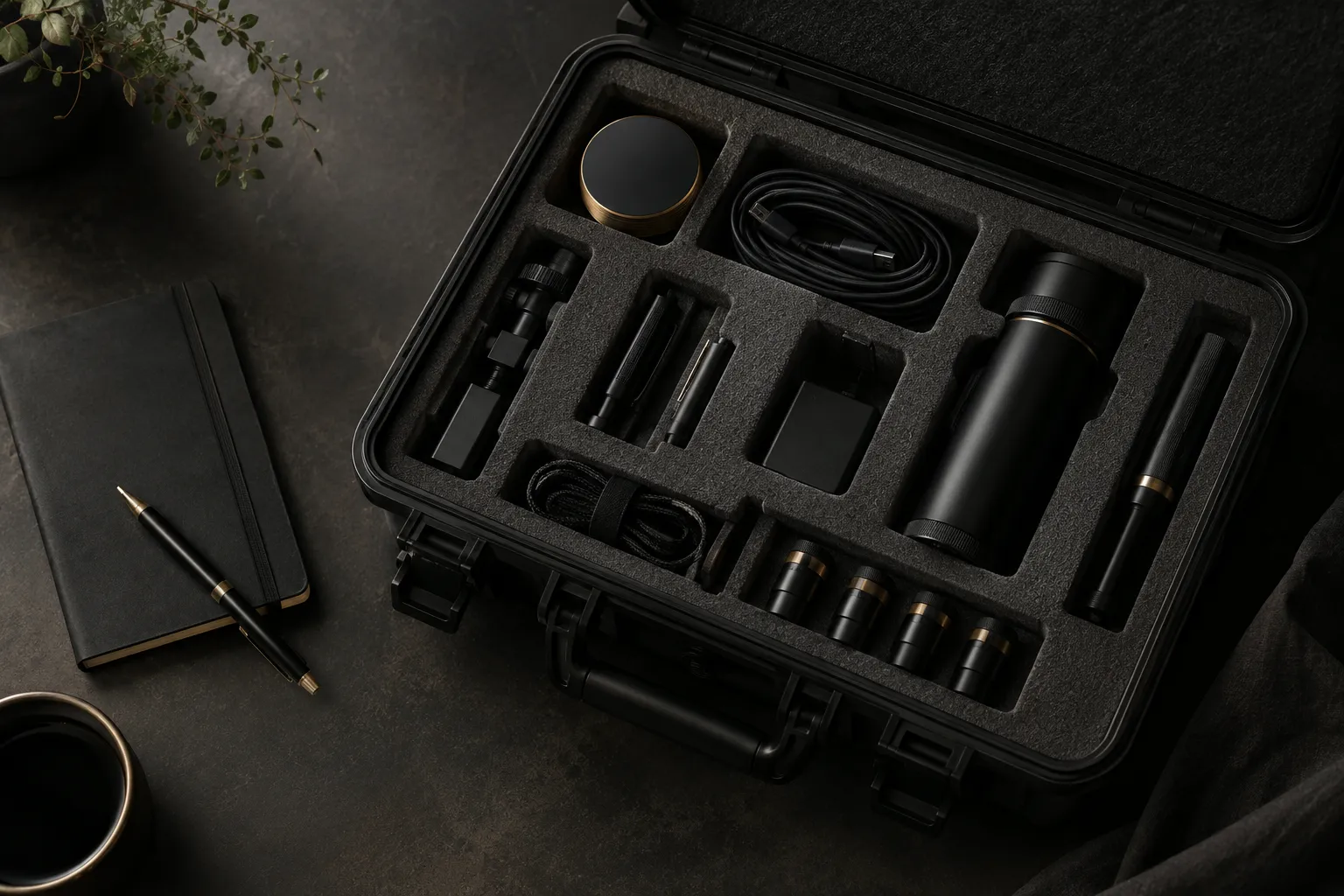
Construction Site TSCM: Post-Renovation Counter-Surveillance Detection for Ontario Contractors (2026)
By Imperial Consulting Unit Inc. · Licensed PI · TSCM Certified
Construction Site TSCM: Post-Renovation Counter-Surveillance Detection for Ontario Contractors (2026)
Between the moment a general contractor grants site access to the first subcontractor and the day the final punch-list is signed, every person who walks through that hoarding door represents a potential surveillance vector. Electricians routing conduit, HVAC technicians accessing ceiling plenums, millwork crews installing built-ins — each trade creates physical access to concealed spaces that, once closed behind drywall, cannot easily be re-entered without opening walls. For Ontario project managers overseeing commercial fit-outs, industrial expansions, or government facility renovations, this access window is the single most underappreciated security vulnerability in the entire project lifecycle. A post-renovation TSCM (Technical Surveillance Countermeasures) sweep is the only way to verify that the space being handed over to occupants is free of planted listening devices, hidden cameras, and network interception points before sensitive operations resume.
In 2026, construction espionage is not hypothetical. Competitive intelligence gathering during design and bidding phases, IP theft targeting architectural innovations, and subcontractor-facilitated data exfiltration represent documented corporate threat vectors — yet no Ontario TSCM provider has published a dedicated framework for construction-phase counter-surveillance. This guide fills that gap, equipping Ontario contractors, project developers, and corporate facilities managers with the threat model, detection methodology, and protocol structure needed to protect high-value projects from pre-handoff surveillance compromise.
For immediate assistance, schedule a post-renovation office TSCM sweep with ICUnit's licensed team.
Construction Phase Risk: When Surveillance Threats Peak During Pre-Renovation, Active Build, and Post-Completion
Surveillance risk on a construction project is not uniform — it follows the project timeline in distinct phases, each with a different threat profile and a different detection window.
Pre-Renovation Baseline Assessment
Before any contractor gains site access, a pre-renovation TSCM sweep establishes a documented clean baseline. This baseline serves two purposes: it identifies any surveillance devices already present in the existing space (particularly relevant for acquired properties or previously leased commercial units), and it creates a comparison reference for all subsequent sweeps. Without a pre-renovation baseline, it is impossible to determine with certainty whether a device found post-renovation was planted during construction or predated the project.
Active Construction Monitoring
During active construction, the threat surface expands daily. Every new penetration — a conduit chase, a cable run, a HVAC duct drop — creates a new concealment location. High-value projects warrant periodic milestone sweeps at construction phase boundaries: after structural rough-in, after MEP (mechanical, electrical, plumbing) rough-in before ceiling close, and after finishes before occupancy. For projects with elevated competitive sensitivity — technology company fit-outs, law firm relocations, government agency tenant improvements — bi-weekly sweeps during active construction are a proportionate response. ICUnit's recurring TSCM membership is structured specifically for clients with ongoing monitoring requirements of this kind.
The Post-Completion Vulnerability Window
The 30-to-90-day window between construction completion and full occupancy is when undetected planted devices become active threats. The space is no longer under contractor observation, sensitive documents and conversations begin flowing through it, and any transmitting device planted during construction is now receiving exactly the intelligence it was designed to capture. A comprehensive post-renovation sweep — ideally completed before the first substantive business operation in the new space — is the single most important TSCM investment in a construction project cycle.
Competitor Intelligence Gathering During Renovation: Ontario's Most Underreported Construction Threat
Corporate espionage during construction takes forms that project managers rarely anticipate. The most common scenarios identified in Ontario construction intelligence cases involve not sophisticated state-sponsored actors but opportunistic competitors with subcontractor access or inside relationships with the trades workforce.
Consider the design phase: architectural and engineering plans for a commercial development often circulate among multiple subcontractor teams before walls are closed. A competitor with a relationship inside a mechanical subcontractor can access proprietary floor plans, room configurations for sensitive operations, and technology infrastructure layouts — intelligence that requires no physical surveillance device at all. But when intelligence gathering escalates to audio monitoring, the construction phase provides unparalleled access. Site offices store bid submissions, client correspondence, and procurement data in environments with minimal physical security. A device planted in a foreman's trailer or a project manager's temporary office before a critical negotiation phase can exfiltrate tens of thousands of dollars of competitively sensitive data without triggering a single IT alert.
The five primary competitor intelligence scenarios on Ontario construction sites in 2026 are: design theft during site tours and subcontractor onboarding; eavesdropping on bid negotiation meetings held in site offices; equipment and material cost monitoring during procurement phases; project timeline intelligence extraction to enable competitive underbidding; and budget overrun documentation capture for litigation positioning. Recognizing these scenarios before they occur — not after — requires the threat-modelling discipline that a formal pre-construction TSCM bundle assessment provides. See also our primer on five warning signs your office has been compromised.
Employee and Subcontractor Data Exfiltration Risk in Construction Environments
Construction sites blur the boundary between employer and third-party contractor in ways that create significant data exfiltration risk. Payroll records, time-tracking data, HR files for a multi-trade workforce, and subcontractor payment ledgers are routinely processed in site office trailers and portable workstations with minimal network security. WiFi networks configured for contractor convenience — open SSIDs, shared credentials, consumer-grade routers — are trivially compromised by a motivated insider or a device configured as a rogue access point.
Break rooms in larger construction projects present a distinct audio surveillance risk. Informal conversations between project leads, forepersons, and subcontractor supervisors in break areas routinely cover scheduling, personnel decisions, safety incidents, and cost overruns — the kind of operational intelligence that, if captured by a competitor or a disgruntled former employee, could constitute actionable harm in a dispute or litigation context.
Subcontractor onboarding is the most underdefended access control point on most Ontario construction sites. ICUnit recommends a structured TSCM onboarding protocol for high-value projects: device screening for construction crews with unusual levels of site access, dedicated contractor WiFi VLANs isolated from project management systems, visitor management logs for all trailer entry, and tool inspection procedures for trades working in sensitive spaces like server rooms, boardrooms, and executive suites. For ongoing project coverage, the recurring TSCM membership program allows project managers to schedule periodic construction-phase sweeps without negotiating a separate engagement for each milestone.
Design Theft and IP Exposure: Protecting Proprietary Construction Plans in Site Offices
Proprietary architectural drawings, engineering specifications, construction methodology documentation, and project cost models represent some of the most valuable intellectual property a general contractor holds. Yet this IP routinely sits in portable site trailers, on unlocked workstations, and in plan-review sets accessible to any trade team with site credentials.
The physical security of site offices is governed by the general contractor's own protocols — there is no provincial construction standard mandating surveillance countermeasures for project documentation. Ontario's Private Security and Investigative Services Act (PSISA), 2005 governs the licensing of investigators who conduct TSCM work; the Criminal Code of Canada, Part VI criminalizes the unauthorized interception of private communications. But the burden of detection falls on the contractor.
An office TSCM sweep of site trailers before first use — and at each major project milestone — closes the physical surveillance gap that technical and legal frameworks alone cannot address. For projects involving proprietary construction methodologies, material-sourcing innovations, or cost-model competitiveness, the business case for pre-occupancy TSCM is straightforward: the cost of a sweep is a fraction of the exposure from a single exfiltrated bid submission or design package.
Post-Renovation TSCM Sweep: Comprehensive Detection Methodology
A professional post-renovation TSCM sweep is substantially more rigorous than a generic office sweep conducted on an occupied, stable space. Construction environments introduce unique concealment opportunities — freshly closed drywall, new ceiling tiles with displaced plenum access, newly routed conduit, recently installed electrical receptacles — that require a methodical multi-technique approach.
RF Spectrum Analysis
The sweep begins with a broadband RF scan of the entire space with all non-essential electronics powered down. ICUnit's instrumentation covers the full spectrum from near-DC through low microwave, including common IoT transmission bands, GSM/LTE cellular bands, and sub-1GHz low-power transmission frequencies favoured by small planted devices. Any anomalous signal is cross-referenced against the expected RF profile of the building's installed systems before investigation.
NLJD Scanning of New Construction Elements
Non-Linear Junction Detection (NLJD) is indispensable in post-renovation environments because it detects semiconductor junctions in both powered and unpowered devices. A transmitter with its battery depleted, or a wired tap in a dormant state, will not appear on an RF scan — but will respond to NLJD illumination. Every newly closed wall section, ceiling tile grid, HVAC grille, and electrical rough-in area receives NLJD examination.
Telephone, Network, and Optical Inspection
All newly installed telephone lines and data network infrastructure are tested with purpose-built line analyzers that detect voltage anomalies, impedance irregularities, and current-loop interception signatures consistent with wired wiretaps or in-line recording devices. Optical lens detection — using near-infrared illumination equipment — sweeps all new ceiling penetrations, light fixtures, HVAC diffusers, and installed millwork for pinhole camera lenses. Thermal imaging identifies heat-generating concealed electronics in newly closed wall and ceiling cavities.
The complete protocol mirrors the layered methodology described in our office bug sweep detection guide. Every sweep produces a written report with findings, device locations if applicable, and recommendations — documentation structured for project files, insurance records, or legal proceedings.
TSCM Detection Across the Construction Timeline: Phase Reference Table
The table below maps each construction phase to its primary surveillance risk, recommended TSCM action, and the detection technique most relevant to that phase.
| Construction Phase | Primary Surveillance Risk | Recommended TSCM Action | Key Detection Technique |
|---|---|---|---|
| Pre-mobilization | Legacy devices in existing space; pre-existing wired taps | Baseline sweep before contractor access | RF spectrum + NLJD + line analysis |
| Demolition / rough-in | Concealment in opened structural cavities | Access control audit; site office sweep | Physical inspection; NLJD of new cavities |
| MEP rough-in | Devices in conduit, duct chases, above-slab runs | Milestone sweep at MEP rough-in complete | NLJD; thermal imaging of mechanical spaces |
| Ceiling close / drywall | Devices sealed inside new walls/ceilings before close | Pre-close inspection of high-sensitivity rooms | NLJD; RF scan before close |
| Finishes / millwork | Optical devices in new fixtures, millwork, tile | Optical detection sweep of installed finishes | Lens detection; IR camera inspection |
| Post-renovation (30–90 days) | All planted devices active with occupants present | Comprehensive post-renovation TSCM sweep | Full protocol: RF + NLJD + optical + line analysis |
For project teams managing construction activity across the Toronto core and GTA, ICUnit coordinates sweep scheduling around construction milestone schedules to minimize project timeline impact. The office and vehicle bundle is particularly relevant for construction projects involving a fleet of site vehicles — company pickup trucks, superintendent vehicles, and project management cars warrant the same sweep protocol as the site office itself.
Phased TSCM Coordination for Large Multi-Phase Ontario Construction Projects
Multi-phase projects — campus expansions, phased commercial fit-outs, rolling infrastructure upgrades — present a coordination challenge that single-event sweeps cannot address. Each phase completion creates a new occupancy threshold, a new set of closed construction elements, and a new access control gap. Without a coordinated phased TSCM schedule aligned to the project's construction programme, the cumulative surveillance exposure across a multi-year project can be substantial.
ICUnit's phased TSCM coordination model establishes a project TSCM coordinator role at project inception, develops a sweep schedule mapped to the project's construction milestone programme, assigns documentation standards for each phase, and maintains a cross-phase threat assessment that evolves as subcontractor rosters change and scope additions create new access events. For active construction projects in Hamilton's industrial sector — where large-scale manufacturing fit-outs, warehouse expansions, and infrastructure upgrades are ongoing in 2026 — this coordinated approach provides continuous assurance across multi-building project portfolios.
Phased TSCM clients with ongoing protection requirements are typically best served by ICUnit's recurring TSCM membership, which structures sweep frequency, priority scheduling, and reporting continuity under a single retainer. Pricing is custom — quoted privately after a confidential consultation.
Evidence Preservation and Law Enforcement Reporting When a Device Is Found
Discovery of a surveillance device on a construction site triggers legal obligations and strategic decisions that must be managed carefully. Disturbing a found device before documentation compromises forensic value and may create evidentiary problems in subsequent criminal or civil proceedings.
ICUnit's protocol on device discovery: the device is documented in place with calibrated photographs and positional reference measurements before any contact. The client is briefed on the device type and probable function before law enforcement is contacted. For devices found in Ontario construction sites, the relevant enforcement agencies are the Ontario Provincial Police (OPP) for projects outside municipal boundaries, Toronto Police Service (TPS) for projects within the City of Toronto, and RCMP for projects with federal infrastructure involvement. ICUnit prepares a chain-of-custody report structured for each agency's intake requirements.
The civil litigation dimension is equally significant. Unauthorized device placement on a construction site may support claims for IP theft, breach of confidentiality agreement, tortious interference with business relations, and breach of privacy under applicable Ontario privacy framework. A professional TSCM report — issued by a PSISA-licensed investigator — carries the evidentiary weight that a self-conducted inspection cannot. For the full evidence preservation framework applicable to corporate surveillance breaches, see our guide on office bug sweep detection and documentation.
Why Choose ICUnit for Construction TSCM in Ontario
Ontario has no shortage of general security firms — but construction-specific TSCM, with the phase-by-phase threat modelling, milestone-aligned sweep scheduling, and construction-document-chain-of-custody expertise this niche requires, is a capability that very few licensed operators in the province have developed. ICUnit brings three specific advantages to construction TSCM engagements:
Licensed and Certified. ICUnit's founder holds credentials that construction clients require for legally defensible reports: a CAF Veteran background, PSISA-licensed Private Investigator status under Ontario's Private Security and Investigative Services Act, MESA RF Certification, and TSCM Certification. These credentials matter when a report needs to withstand scrutiny in a construction defect lawsuit, an insurance claim, or a criminal investigation referral.
Mobile Across Ontario. ICUnit operates across the full Ontario construction market — from the Toronto core and GTA to Hamilton's industrial corridor, Ottawa's government facility sector, and regional construction markets in Kitchener-Waterloo, Barrie, Kingston, and Niagara. Multi-site project coordination is a standard service capability, not a special accommodation.
Discreet and Documented. Construction site sweeps are conducted with discretion appropriate to a working project environment — no disruptive equipment, no interruption to active trades, full coordination with the site superintendent. Every engagement produces a written report for project files, formatted for counsel, insurer, or regulatory submission. Pricing is custom — quoted privately after a confidential consultation.
For fleet vehicles assigned to construction project management — superintendent trucks, executive site vehicles, project delivery vehicles — ICUnit's vehicle GPS sweep service extends the same counter-surveillance discipline to the mobile dimension of your project operations.
"We completed a major fit-out in the Financial District in early 2026 and brought ICUnit in for a post-renovation sweep before our leadership team moved in. Their NLJD scan flagged an anomaly in the newly drywalled boardroom — turned out to be a device installed by someone with site access during the MEP phase. The written report ICUnit provided was exactly what our legal team needed. The sweep paid for itself many times over."
— Director of Operations, commercial tenant, Toronto Financial District, 2026
ICUnit Construction TSCM Service Area: Ontario Commercial and Industrial Projects
ICUnit serves Ontario construction projects across the province's major commercial and industrial markets. Post-renovation TSCM sweeps, phased construction monitoring, and emergency counter-surveillance response are available at:
- Toronto — Financial District, Liberty Village, King West, Waterfront, North York, Scarborough fit-outs and major commercial renovations
- GTA — Mississauga, Brampton, Vaughan, Markham, Richmond Hill, Oakville industrial and commercial construction
- Hamilton — Manufacturing, warehouse, and industrial construction in the Greater Hamilton Area
- Ottawa — Government facility fit-outs, embassy-adjacent commercial renovation, federal property renovation projects
- Kitchener-Waterloo — Technology sector commercial fit-outs, research facility renovations
- Barrie, Kingston, Niagara — Regional commercial construction, municipal facility renovations, institutional projects
ICUnit is mobile across Ontario. Remote site access and advance scheduling for multi-day construction-phase sweeps are standard. Request a confidential construction TSCM consultation to discuss your project's specific phase and coverage requirements.
Frequently Asked Questions: Construction Site TSCM and Post-Renovation Counter-Surveillance in Ontario
What surveillance threats occur during office renovation and construction in Ontario?
During active construction, unescorted subcontractor access creates multiple insertion points for listening devices, hidden cameras, and network taps. Common vectors include bugged site office trailers, RF transmitters concealed in new drywall cavities, network infrastructure compromised during cabling work, and optical devices embedded in ceiling tile or HVAC grilles during installation. Competitor intelligence gathering, design IP theft, and employee data exfiltration are the primary threat drivers for Ontario commercial and industrial projects in 2026.
Should contractors conduct a TSCM sweep after construction project completion?
Yes. The post-renovation window — the 30 to 90 days immediately after construction closes and before full occupancy — is the highest-risk phase of any commercial project. Devices planted during active construction remain in place and begin transmitting once occupants bring in sensitive conversations and proprietary data. A professional post-renovation TSCM sweep establishes a verified clean baseline before business operations resume.
How does TSCM detect bugs planted during construction site access?
A licensed TSCM specialist uses a layered methodology: RF spectrum analysis to detect active transmitters; Non-Linear Junction Detection (NLJD) to locate powered and unpowered devices concealed in walls, ceilings, or conduit; telephone and network line analysis to identify wired interception points; optical lens detection for hidden cameras; and thermal imaging for concealed electronics. Physical inspection of new construction elements — receptacle boxes, junction boxes, dropped ceilings, HVAC returns — completes the protocol.
How does phased TSCM work for large multi-phase construction projects?
For multi-phase projects, ICUnit coordinates a phased TSCM schedule: pre-construction baseline sweep before any contractor access; periodic milestone sweeps at key phase completions (structural close, MEP rough-in, ceiling close, finishes); and a comprehensive post-completion sweep before occupancy. Each phase produces its own documentation chain, supporting project liability records and insurance requirements. Pricing is custom — quoted privately after a confidential consultation.
What Ontario law applies when a surveillance device is found on a construction site?
Unauthorized interception of private communications is a serious criminal offence under Part VI of Canada's Criminal Code (sections 183–196). If a TSCM sweep discovers a planted device, it must not be disturbed before photographic documentation and law enforcement notification. ICUnit provides chain-of-custody documentation suitable for OPP, Toronto Police Service, or RCMP referrals, and prepares written reports for civil litigation, insurance claims, and regulatory filings.
How should construction site offices and trailers be secured against surveillance?
Site office trailers housing sensitive documents should be swept for RF transmitters and hidden cameras before use. Network infrastructure in temporary offices must use encrypted WiFi with contractor-isolated VLANs. Access logs for trailers should be maintained for all subcontractor visits. ICUnit recommends a trailer sweep at project mobilization, at each construction phase boundary, and immediately before project handoff.
Can a TSCM sweep help with construction defect litigation or insurance claims in Ontario?
Yes. If a surveillance device is discovered during or after a construction project, a professional TSCM report documents the device type, location, and operational status — evidence directly relevant to IP theft claims, bid-disclosure lawsuits, construction defect disputes, and corporate espionage insurance claims. ICUnit's written reports follow chain-of-custody standards and are formatted for use by Ontario counsel in civil and criminal proceedings.
What is the cost of a post-renovation TSCM sweep for a construction project in Ontario?
Pricing is custom — quoted privately after a confidential consultation. Sweep scope, site size, number of phases, and documentation requirements all affect the final quote. Contact ICUnit directly at 905-955-7689 or through the confidential consultation form to discuss your project.
Stay Connected
Follow the ICUnit field log on LinkedIn for new Ontario threat intelligence and construction TSCM case updates, and read our Google reviews from past sweep clients across the province.
Get Your Free Quote Today
Ontario's construction market generates hundreds of post-renovation TSCM opportunities annually — and until now, no licensed Ontario provider has published a dedicated construction counter-surveillance framework. ICUnit is the province's only TSCM practice with documented construction-phase threat modelling, phased sweep coordination, and PSISA-licensed reporting built specifically for the general contractor and project developer market.
Whether your project is a single-phase commercial fit-out in the Toronto core or a multi-year campus expansion across several Ontario municipalities, ICUnit is mobile, discreet, and equipped to protect the intelligence value of your construction program.
Call: 905-955-7689 — or book a confidential construction TSCM consultation online. Written reports for counsel. Chain-of-custody documentation. Mobile across Ontario.